Accepting new clients · From $3,995/mo · Fixed-price projects · 1–2 business day turnaround · cancel anytime
Startup design, back in 1–2 business days.
We work with a few startups and small funds at a time — each one gets our full focus. Every kind of design your team needs, from $3,995/month — or designed and built, from $6,495/month — or a fixed-price project. No meetings.
Built end to end.
Every piece is live: click through and scroll it.
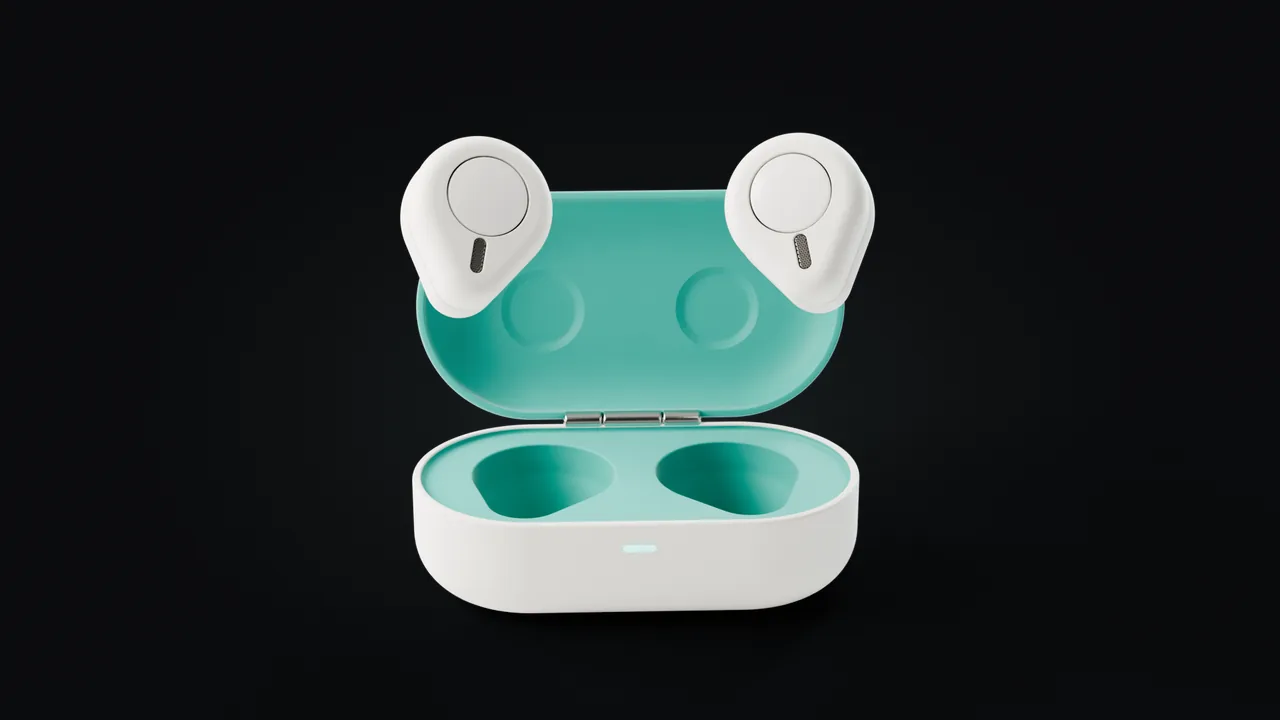
- (01)A launch page for a pair of earbudsLanding page · 3D product video
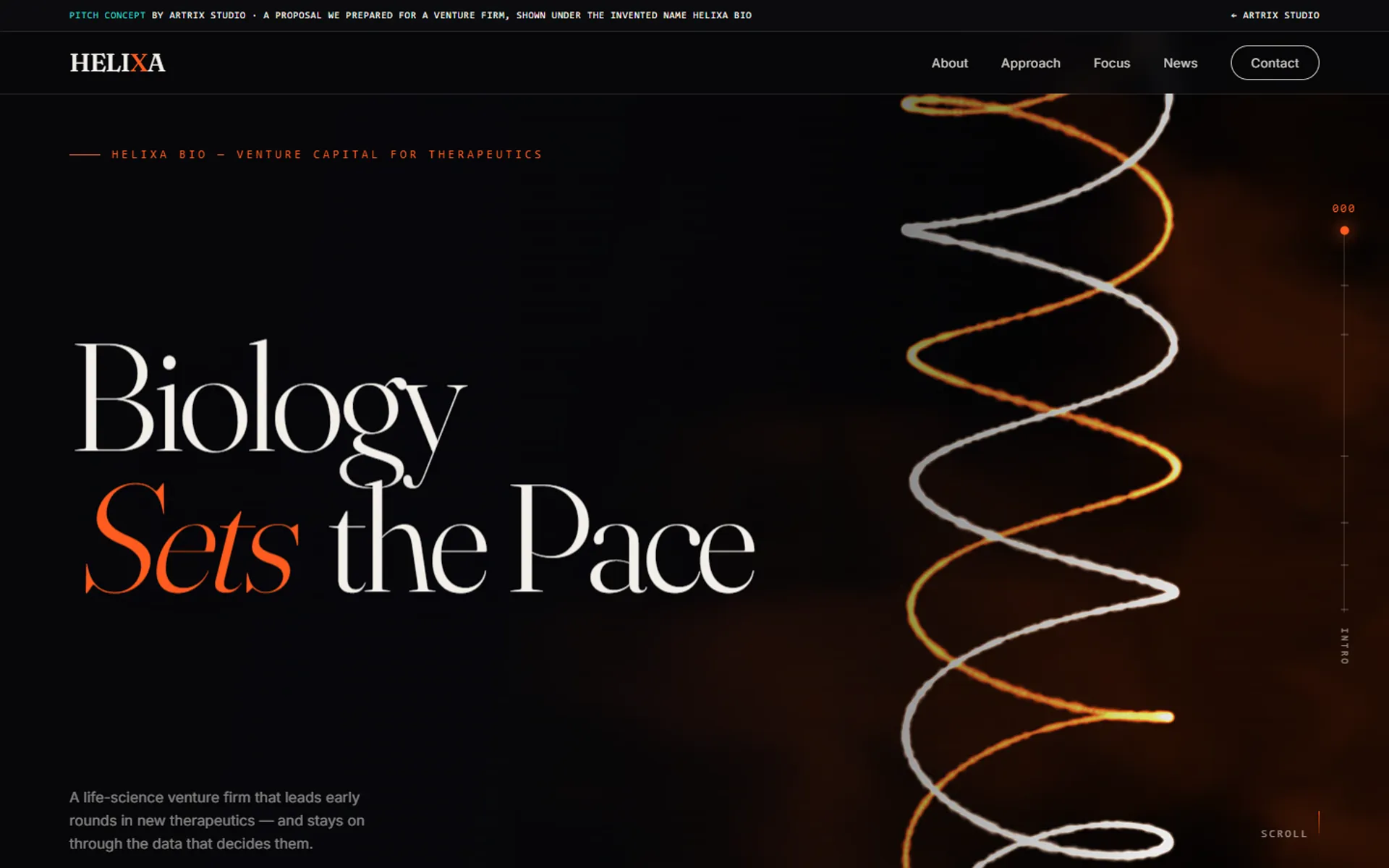
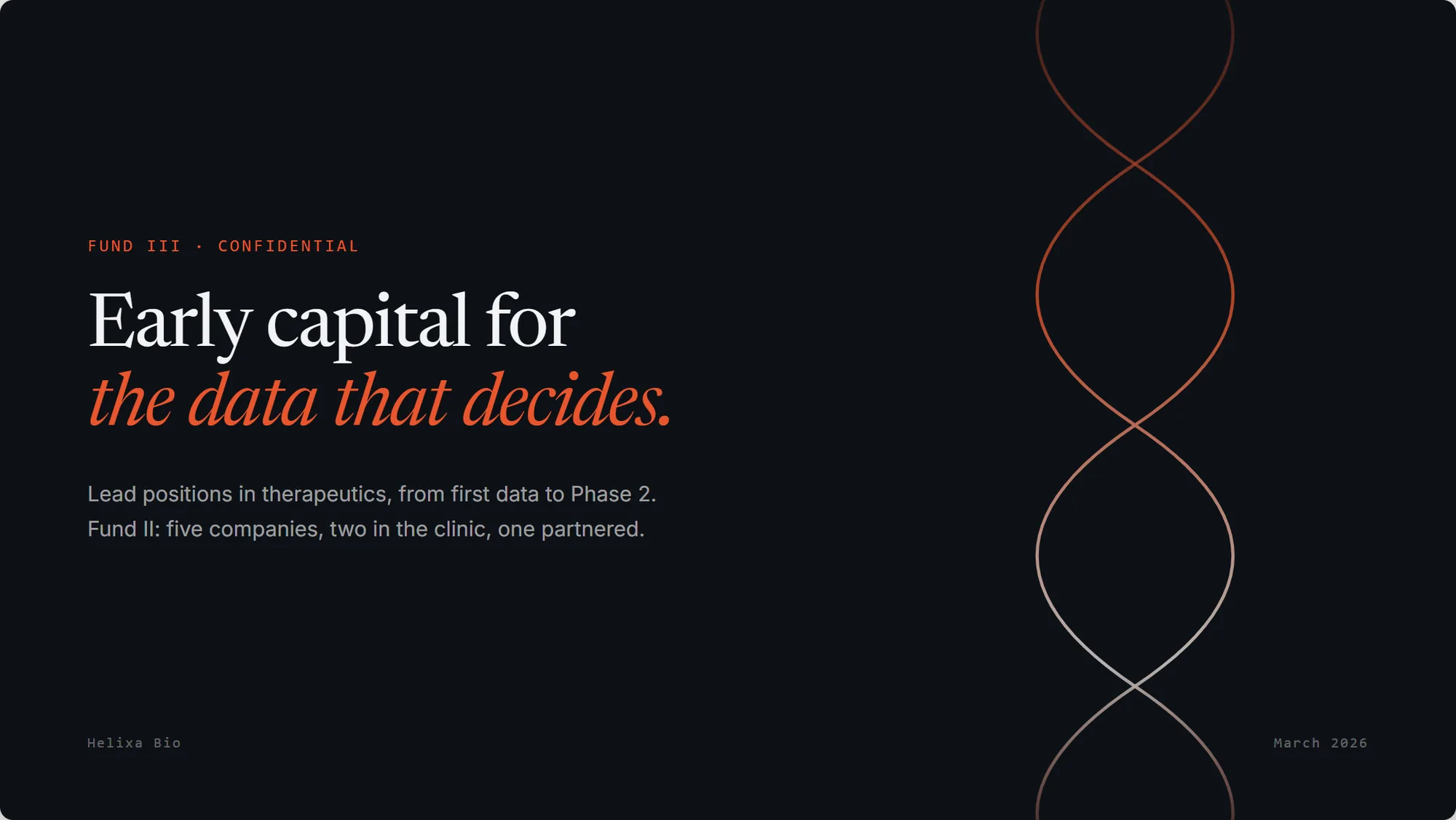
- (02)A homepage for a life-science VCWebsite · WebGL · Front-end build
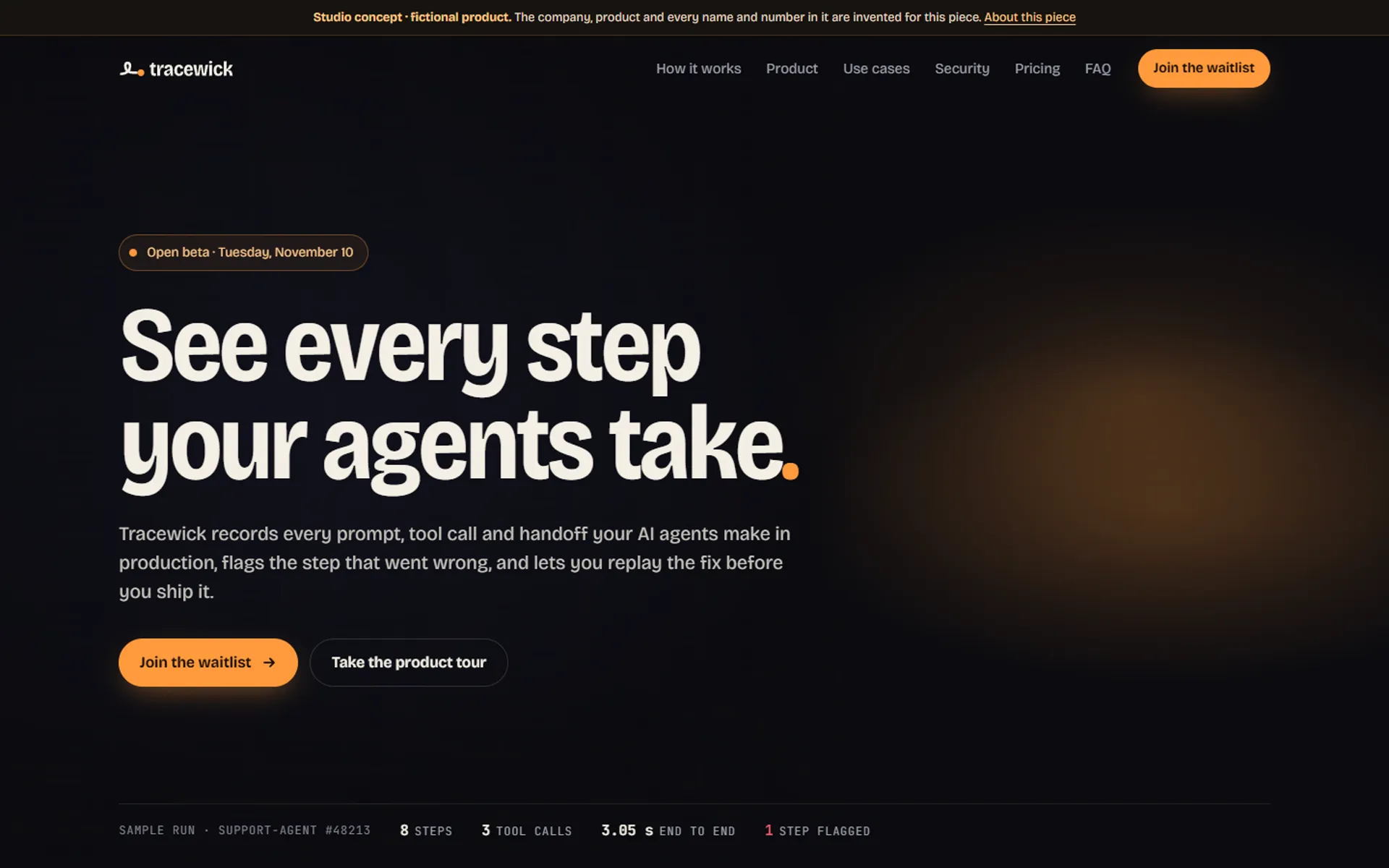
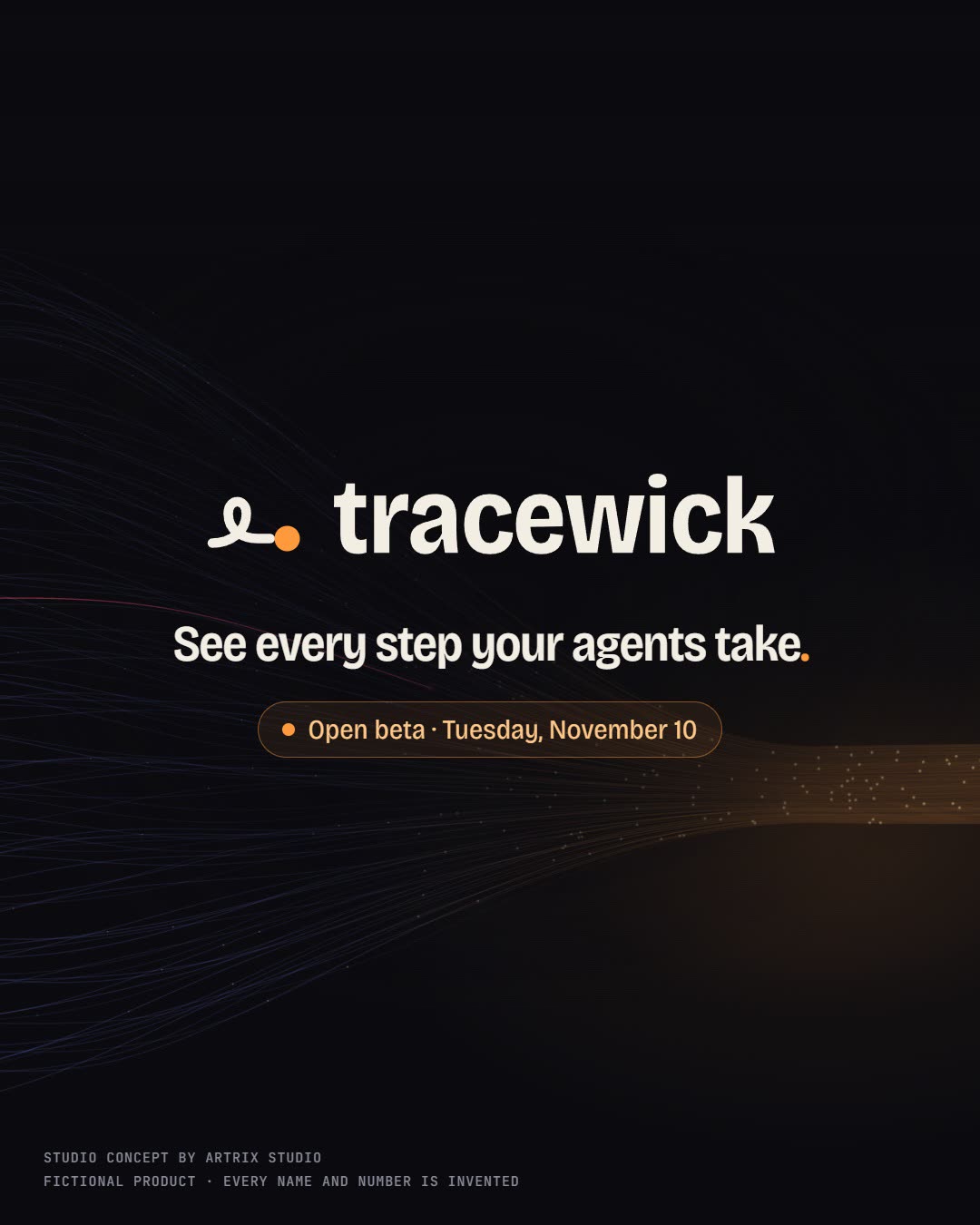
- (03)A launch kit for an AI productLanding page · Brand identity · Launch video
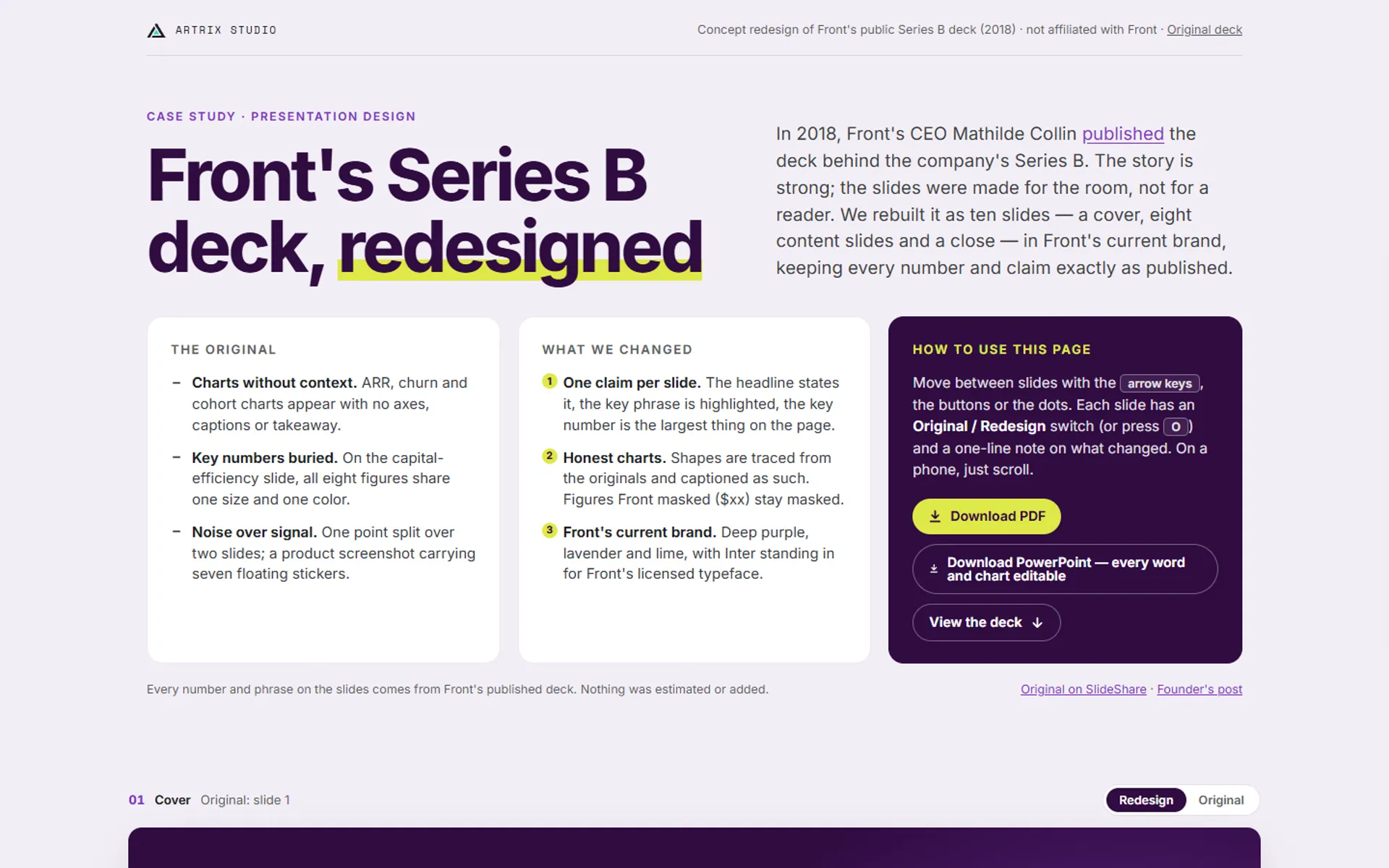
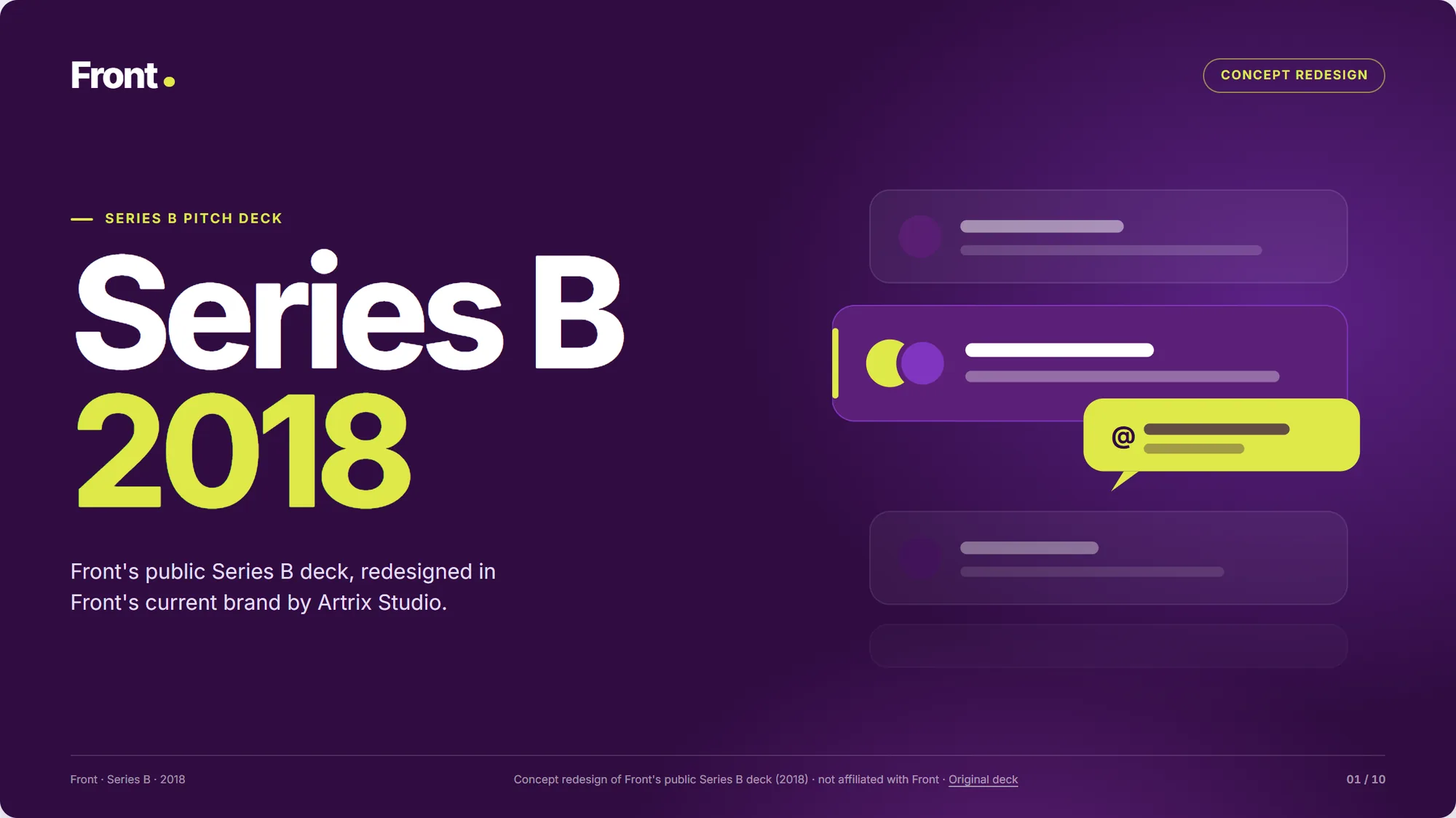
- (04)Front's Series B deck, redesignedPitch deck · Interactive + PDF
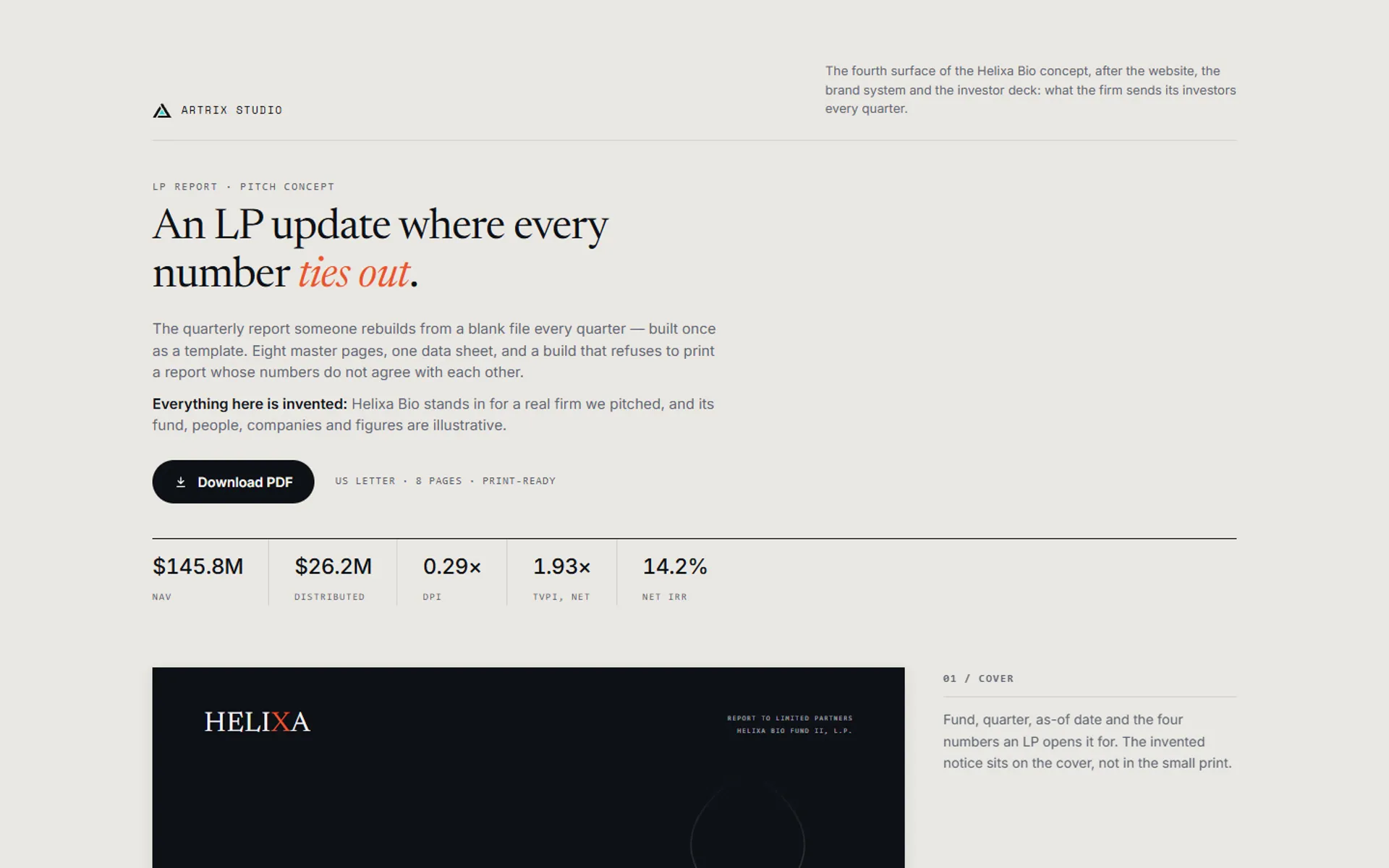
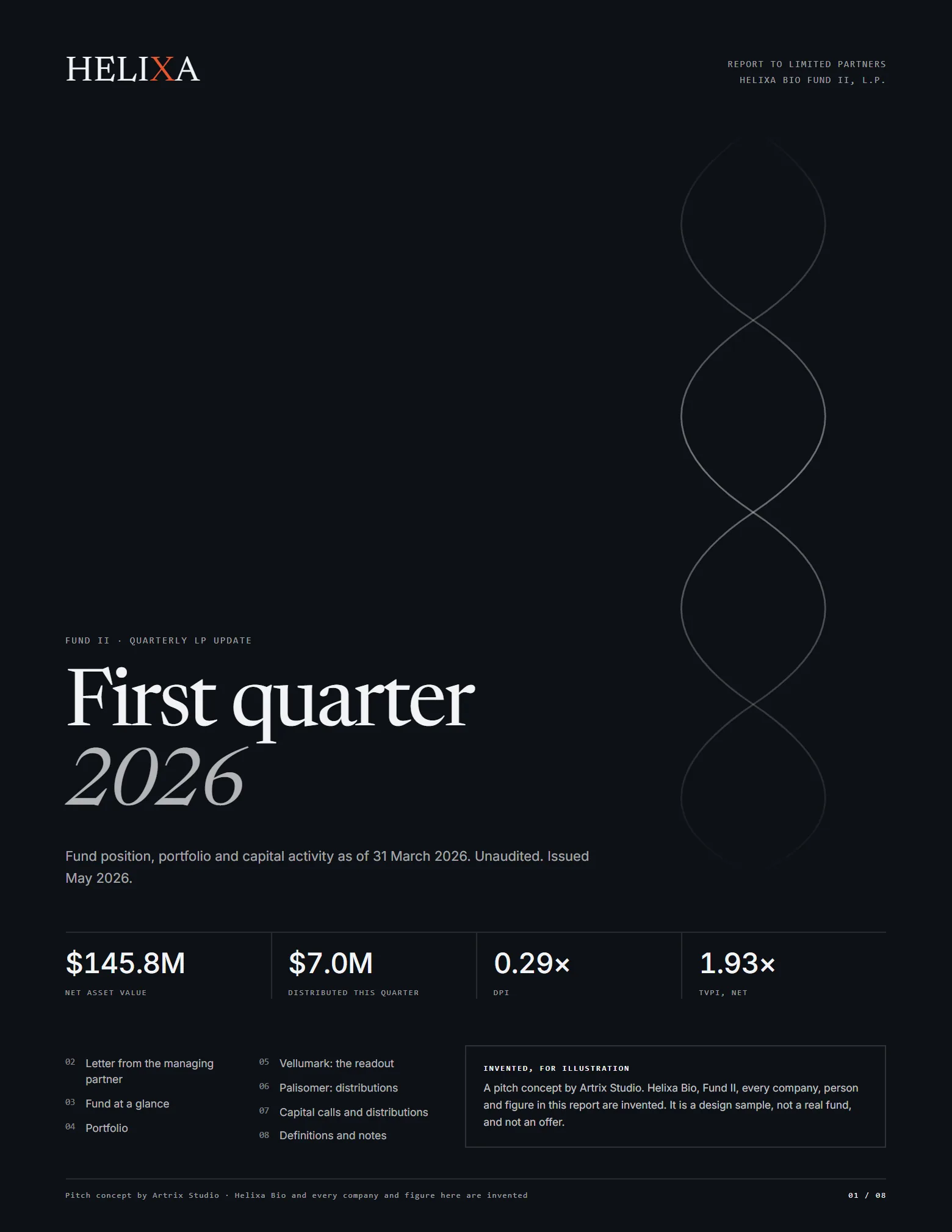
- (05)An LP report that builds itselfAutomation · Investor report · PDF

One subscription, every format.
- Landing PagesA03 · Tracewick landing page →
- Social CreativesA03 · Tracewick launch post →
- Pitch DecksA04 · Front's Series B, redesigned · not affiliated →
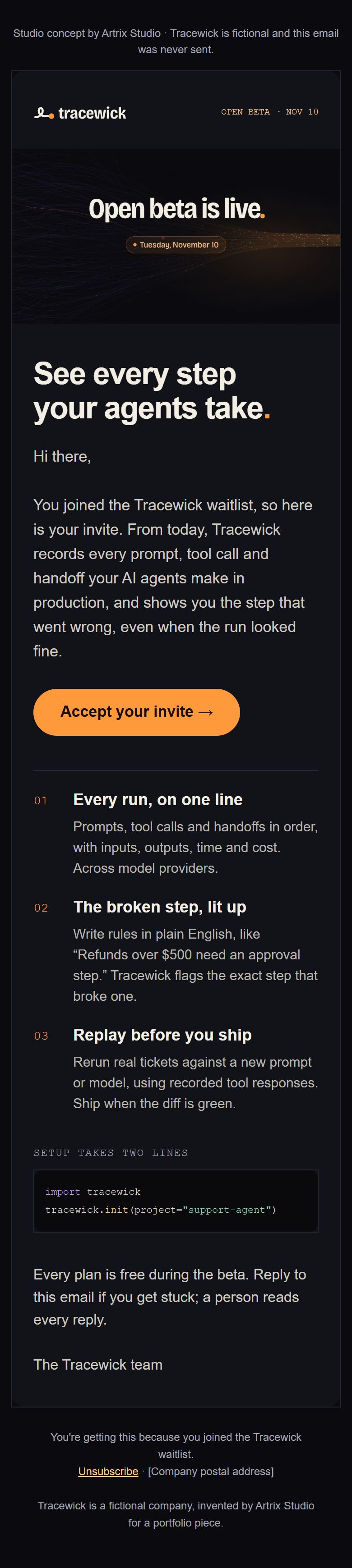
- Email TemplatesA03 · Tracewick launch email, on a phone →
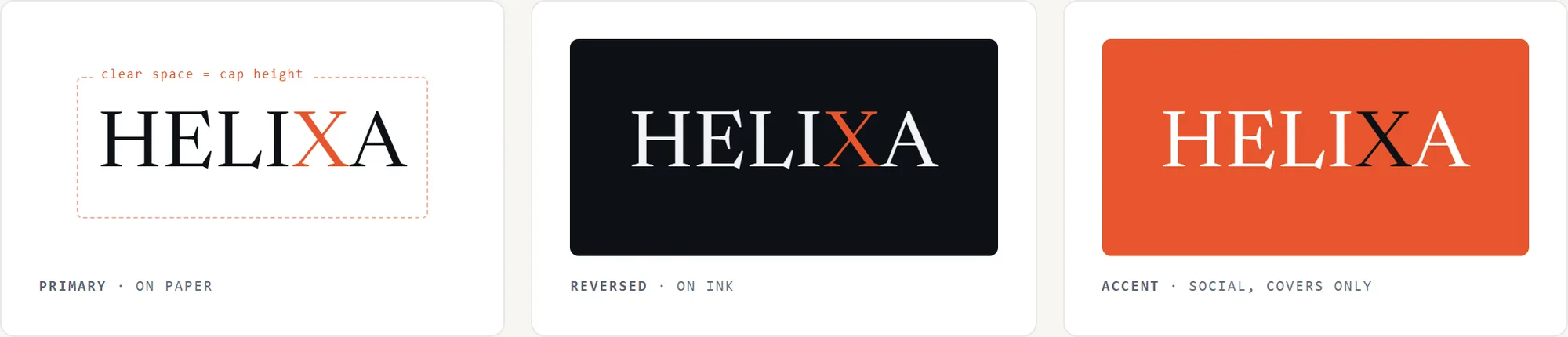
- Brand SystemsWordmark lockups →
- AutomationsA05 · LP report, filled from one data sheet →
- Design SystemsInvestor deck system →
- Launch AssetsA03 · Tracewick teaser →
- Product VideosA01 · Merrow Still earbuds, rendered in 3D →
- Front-end BuildA02 · Helixa homepage, built live →

Fully async.
- Tell us what you needA two-minute form, no call
- We reply in 12hFit, exact price, start date
- You pay by Stripe linkCard or ACH, sent by email
- Notion opens, work startsFirst draft within 1–2 business days
A typical week with Artrix
One request moves at a time on Design, two to three on Design + Build, and the next one starts the moment the last goes to review. Here is a typical week on Design.
- MondayThree cards on the boardA landing page, an ad set and a deck update. You drag the landing page to the top; work on it starts today.
- TuesdayQuestions, in writingAnything unclear gets a comment on the card, not a call. The ad set is sized up and waiting its turn.
- WednesdayFirst draft landsThe landing page is on the card, 1–2 business days from the brief. The ad set starts the moment it goes to review.
- ThursdayRevise one, draft the nextYour comments on the page are done the same day. On Design + Build, the page is being built alongside.
- FridayOne shipped, the next in reviewThe page is final — on Design + Build it goes live once you write "OK to publish". The ad set's first draft is on its card; the deck update is next in line.
What you get
One subscription, every kind of design. Brand, product, marketing, presentation — and the front-end build when you need the thing to actually go live.
Visual & Product
- Landing pages
- Pitch decks
- Brand systems
- UI components
- Design systems
Campaign Design
- Social ad creatives
- Email templates
- Launch assets
- Short product videos
- Banner sets
- Campaign visuals
Speed & Systems
- Small edits to live sites
- Site content your team edits in Notion
- Reusable templates
- AI-assisted workflows
Simple pricing
Two monthly plans and a one-week booking, all priced here. Projects get a fixed quote within 12 hours.
per month · small site edits count as requests
Ongoing work, and you have developers
- 1–2 business days per request
- Eight to twelve requests a month
- 1 active at once, unlimited queue
- Unlimited revisions
per month · step down to Design once the site is live
A small site, new pages or a launch to build
- 1–2 business days per request
- Every page built and put live
- 2–3 active at once, unlimited queue
- Unlimited revisions
- CMS your team can edit
| Design$3,995/mo | Design + Build$6,495/mo | A week$1,995 once | |
|---|---|---|---|
| Speed and volume | |||
| Best for | Ongoing work, and you have developers | A small site, new pages or a launch to build | One main piece and the set that goes with it — a raise deck, a launch page, a fund's portfolio page — or three to five small pieces from your backlog |
| Delivery | 1–2 business days per request | 1–2 business days per request | 5 business days, worked in your order |
| How much gets done | Eight to twelve requests a month — a six-page site and a few pieces around it | The same, with each page built and put live — a six-page site takes most of a month | In five days: the main piece and its set first, then as much of your backlog as fits |
| Active at once | 1 | 2–3 | 1 |
| Queue behind it | Unlimited | Unlimited | Your list, as far as the week goes |
| Revisions | Unlimited | Unlimited | Unlimited, within the week |
| Rush | Priced per request — first draft the next business day, top of the queue | Priced per request — first draft the next business day, top of the queue | +50% on the days a deadline pulls in |
| What is included | |||
| Sending & tracking | Your own Notion board — add a card, watch it move | Your own Notion board, plus the site project or repo | Your own Notion board for the week |
| Site edits | As requests — copy, images and small layout changes in the Framer, WordPress or Webflow site you already have, each one counted as a request | ✓ Includedwe build it, so we keep it running: fixes, small changes and new pages | Fits inside the week |
| Front-end build | Not included | ✓ Includedsmall marketing sites and new pages, put live, about six pages a month (stores, logins, web apps and bigger sites are quoted as projects) | Not included |
| Content your team edits | — | ✓ Includedin the CMS you already use (Framer, WordPress), or in Notion on sites we build in code | — |
| You keep | Source files — Figma, and decks in Google Slides, Keynote or PowerPoint | Source files, plus the site: your Framer or WordPress project, or a repo in your account | Source files — Figma, and decks in Google Slides, Keynote or PowerPoint |
| Terms | |||
| Credited to your first month | — | — | The full $1,995, on any monthly plan started within 30 days |
| Switch plans | Any month | Any month — step down to Design once the site is live | Move onto any plan within 30 days — the full $1,995 comes off your first month |
| Pause | Up to 2 months a year | Up to 2 months a year | — |
| Commitment | Month-to-month; cancel at least two business days before the next billing date | Month-to-month; cancel at least two business days before the next billing date | None |
| Start Design → | Start Design + Build → | Book a week → | |
Not ready for a month? Book a week.
$1,995 onceone-time, one per team — start any monthly plan within 30 days and the full $1,995 comes off
- 5 business days, worked in your order
- One main piece and its set
- Your list, as far as the week goes
- Unlimited revisions, within the week
- RaisingA 12–15 slide deck, a one-page teaser and announcement cards
- LaunchingA landing page designed for laptop and phone, with link-preview and social images
- Running a fundA portfolio page redesign, a one-page fund overview and cards for portfolio news
- Clearing a backlogThree to five small pieces from your list, like social cards, a one-pager or slide fixes
Websites, report and deck templates, 3D and motion, longer videos and automations: tell us what you need and we send a fixed quote within 12 hours, before anything starts. See a sample LP report.
Ask for a fixed quote →Less than a hire, and ready this week.
A designer who covers brand, web, decks and ads, and can build the page too, is hard to find and slow to hire. A plan starts the business day after you pay, and pauses when your roadmap does.
- Start this weekNo hiring, no long onboarding — work starts the business day after you pay
- Every disciplineBrand, product, marketing and presentation design in one subscription
- Flexible by natureScale up, or pause for a month or two when your roadmap shifts
Why trust a studio you haven't heard of
Artrix is a new studio, so there are no logos here yet — and we're not going to invent five-star quotes. Here's what we offer instead: terms you can hold us to.
- Proof before you pay
We don't ask you to trust a logo wall. Send us your homepage, a deck, a launch video or an ad set, and within a day you get a written review — what we would change and why, with screenshots of each thing we found. Then judge the work, not the years.
See a sample review →Ask for yours → - A very small team, led by Nick
Artrix is led by Nick, a designer with more than ten years of work in the Bay Area for startups, venture funds and research organizations. One brief, one thread, one person accountable from scope to sign-off. Want his background and references? Ask by email and we share them with you privately.
- Stop in week one, pay for the days
Tell us inside seven days that it isn't working and we stop. You pay only for the business days we worked, at a booked week's day rate, and the rest of the month is refunded, less Stripe’s processing fee. Nothing to argue about.
- Shipped, not just designed
We hand over live pages, not only Figma files — checked with Google Lighthouse on a phone and a laptop before handover, aiming for 90+ on performance, accessibility and best practices, and on SEO for every page meant to be found.
Frequently asked questions
Everything you need to know before getting started.
How do I get started?
Fill in the short form on our start page — your name, email, website, what you need and, if there is one, your deadline; it takes two minutes and there is no call. You get an email confirming we have it, and we usually reply within 12 hours with how we'd approach it, your dates (start, first draft, delivery), the price and a secure payment link — or an invoice, if your finance team prefers. Once it is paid, your Notion board arrives the same day with your brief already on it. Prefer email? Write to hihi@artrixstudio.com and we'll take it from there.
Can I try you before committing to a month?
Yes. Book a week for $1,995: five business days on your list — one main piece like a deck or a landing page, the pieces that go with it, then as much of your backlog as fits. One week per team, no subscription, nothing to cancel. Start any monthly plan within 30 days of the week ending and the full $1,995 comes off your first invoice, so trying us first costs you nothing extra. On a plan every request comes back in 1–2 business days, so once a week has shown the work fits, a plan is the cheaper way to keep going.
Do we need a call first?
No — on purpose. Every question gets a written answer, usually within 12 hours, with a screenshot or a quick mockup when a picture explains it faster. If something is easier to say out loud, record a Loom and send the link: we watch it and reply in writing. Nothing gets lost in a meeting, and you keep a record of every decision.
Who is Artrix for?
Startups from seed to Series B, and small funds, in the Bay Area, New York and anywhere that works async. That is who this studio was set up for, so we already know what a portfolio one-pager, an LP update or a data-heavy deck has to survive. The work on this page sits in that world for the same reason.
We are a fund. Can our portfolio companies use you?
Yes. Any founder you send can start with the free design review, in writing and usually within a day, before anyone pays anything — an easy thing to pass on. For a platform team, we can agree a portfolio arrangement in writing (for example, a set of reviews for your companies, or priority when places are limited), and your own fund work — the site, the LP report — can be a one-off project or a plan like anyone else's.
What counts as one request?
One named deliverable: one page of up to about six sections, a deck of up to about twelve slides, an ad set in up to six sizes, an email template, a short marketing video of up to 30 seconds made from your own footage, screen recordings, screenshots or photos with simple motion, text and transitions (up to 90 seconds counts as two; anything that needs a 3D model or custom animation is a project, whatever its length). Bigger work is split before it starts: a website is one request per page (a blog, case-study or team template counts as one page; the entries are content), a brand system is three (marks, color and type, applications), and we show you the split and the dates on the board. On a subscription it costs no more — it just takes more slots, or more turns of the same slot. What we will not do is hand back half of something and call it done. Revisions are never counted as new requests; only a change of direction, format or deliverable is.
What does ‘unlimited’ actually mean here?
Unlimited requests in the queue and unlimited revision rounds — you never pay per request or argue about scope. It does not mean unlimited work finished per week: realistically a month is eight to twelve requests — pages, decks, ad sets, email templates. On Design, a six-page site takes six of them, so it fits in one month with room for a few pieces around it.
Can I cancel anytime?
Yes. Plans are month-to-month and renew on the date you first paid; tell us at least two business days before then and you are not charged again — no penalty, no exit call. One thing to know up front: after your first week, canceling part-way through a month turns the unused days into credit, good for 12 months, not a refund. In your first week there is a refund, and it is pro-rata: tell us within seven days of your start date that it is not working and we stop, bill only for the business days we worked, at a booked week's day rate, and refund the rest of the month, less the processing fee Stripe keeps on the original payment (about 3% by card, a few dollars by ACH). And if the work is only quiet for a while, you do not have to cancel at all: pause instead. Tell us at least two business days before your next billing date and we pause from that date, in whole months, for up to two months in any twelve, with your place held.
Do you use AI in your workflow?
Yes, and here is exactly how. We set the brief and the rules first, use AI tools to draft layouts and code faster, and then Nick checks every file — on a phone and a laptop — before it reaches you. Only public material goes into them — your live site, published copy, anything already out in the world. Private or confidential material — your numbers, unreleased products, anything not yet public — never does. In video, we never use AI to create or change how your product, your people or your logo look, or to make anything shown as real; AI-generated background footage, images or voices are used only if you agree in writing first, and we tell you which parts they are. You own everything we deliver.
Getting started
I already work with another studio. What does switching look like?
Send us your existing brand system, component library or Figma file and the first request you want done. We work inside your setup rather than rebuilding it — no re-onboarding, no discovery phase you pay for. Your first request comes back within 1–2 business days of your start date, and you can run us alongside your current studio for a month before you decide.
How do requests work?
Your own Notion board arrives the day your first payment clears, with your first brief already on it as a card. After that, add a card with each new brief and any references, and drag the cards into the order you want them done — you can see what is in progress, what is waiting on you, and what has shipped, without asking. Files and feedback live on the same card, so nothing is buried in an email thread. Prefer to just email? That works too; we add it to the board for you. Anyone you invite can add cards; one person on your side sets the order, so two requests never fight for the same slot.
What you get
What does Artrix actually do?
Design work for startups and small funds, delivered in writing and on a board instead of in meetings: websites and landing pages, pitch and sales decks, brand systems, ad sets, launch and event assets, short product videos made from your own footage, screen recordings, screenshots or photos, email templates, product UI — and, on Design + Build, the pages put live on your Framer or WordPress site. We also build automations as one-off projects, moving your data between the tools you already use. Not only websites: the work above includes two decks, a brand system and a full launch kit, from landing page to print files. We polish and restructure your copy rather than write it from a blank page. Need a format that is not shown? Ask, and we will show you how we would approach it before you pay anything.
Why don't you show client logos?
Because we will not show logos or quotes we cannot back up. Artrix is a new studio, and client work is never published without the client’s written permission. So this page shows concept work built to the same standard, and each piece's own page says exactly what it is — and before you pay, we will show you what we would change on your own site.
Can our team update the site without you?
Yes. On Framer, WordPress or Webflow, we work inside your project and reuse your classes, components and CMS collections, so your designer keeps editing the way they do now — we set up the collections so the facts that keep changing (team, jobs, news, events) are easy to edit. On sites we build in code, that content lives in a Notion database instead: change a line there and the site picks it up within minutes. Layout and design changes still come to us as requests; the everyday facts don't have to.
We have an in-house designer. How do you work with them?
Alongside them, not around them. Share your Figma library and invite us to your Framer, WordPress or Webflow project, and we build from your components, styles and classes instead of making new ones — so what we hand back is something your designer can keep editing. They can add cards to the board and review drafts like anyone on your team; the usual split is that they keep the product and the brand decisions, and we take the volume: pages, decks, ad sets and launch assets.
How big a website can you take on?
Small marketing sites of a few pages — typically six: home, product, pricing, about, team, contact. On Design we design them; on Design + Build we also put them live in Framer, WordPress or code. Each page is one request: on Design a six-page site fits in one month, and on Design + Build designing and building it takes most of a month. A blog, case-study or team template counts as one page; the entries are content, and on Design + Build we add your first ten to twenty. Up to about twelve pages runs across two months, or we quote it as a project. Anything bigger or more complex is a project too, with its own fixed price and date: online stores and checkout, logins and member areas, web apps, sites in more than one language or beyond about a dozen pages. Moving hundreds of existing pages or posts to a new platform is quoted the same way. Tell us what it is and the quote usually comes back within 12 hours.
Can you fix something our team repeats every month?
Yes — as a one-off project with a fixed price, not a subscription. If the same report, one-pager or deck gets rebuilt from scratch every cycle, more design hours will not fix it; a system will: a template or component set built once, wired to wherever the data already lives, with the rules written down so it survives without us. For example: a website form that adds each lead to your CRM, posts it in Slack and sends the first reply; a portfolio page that updates when you add a company to Notion; or a monthly report filled in from your spreadsheet. That wiring is an automation, built in your own n8n and accounts, so it stays yours; like any project, it comes with 30 days of bug fixes. Tell us what repeats and we send a fixed quote, usually within 12 hours, before you commit to anything.
What don't you do?
No ongoing paid-media buying and no copywriting from a blank page — we'll polish and restructure your words, not invent your positioning. What we do bring: a naming check, and a one-line position sharpened from what you tell us about your product and buyers. A deck's story is part of the work: we shape the narrative, the order and the one line each slide has to land, from what you tell us. If a request falls outside what we do, we say so on day one instead of delivering something mediocre. Some work sits outside the subscription but not outside what we do. Short marketing videos made from your own material with simple motion, up to 90 seconds, are part of the plans. Detailed video work is taken on as its own project, with its own price and date agreed before we start, whatever its length: anything that needs a 3D model, like the walkthrough or a product spin; animation built from scratch, like the launch teaser on this page; and videos over 90 seconds. We don't film on location: if new footage is needed, we send a short shot list your team can film on a phone. Automations, online stores, logins and member areas, web apps, sites in more than one language and sites beyond about a dozen pages are projects too.
What if we only have photos, not video?
That is common, and usually enough. A short video can be made from your photos, screenshots and brand assets alone: slow camera moves, a sense of depth in your photos, your interface animated from its screenshots, and your own words set in motion — that is an ordinary request on a plan. If it needs more, we send a short shot list you can film on a phone in an afternoon, or you share a demo account with sample data and we record it. For a detailed product film, a 3D model built from your CAD files — or from photos, if that is all there is — gives 360° spins, close-ups and exploded views; building the model takes real time, so that is a fixed-price project. We never use AI to create or change how your product, your people or your logo look, and music is either licensed for commercial use or supplied by you. If the material can't carry the video you have in mind, we tell you before we start and suggest what would work instead.
Can you take over a site someone else built?
Yes, carefully. The first request is a takeover check: it counts as one request on a plan, or is part of a project's quote. We get access, move any accounts or licenses still in the old developer's name into yours, take a backup, and send you a short written note: what we found, what is fragile, and what we would fix first, with what each fix would take. Problems that were there before us are fixed as requests on Design + Build, or quoted as a fixed-price project, and nothing is fixed without your OK. The first week or two can be slower while we learn a site we didn't build; we would rather say so now than promise speed we can't keep. Framer and WordPress sites we take on this way; on Webflow we take on small edits, and anything larger after the check. The hardest takeovers are sites with years of pages and content behind them, so for those the check also maps what is there — pages, CMS collections, forms and connected tools, redirects — before anything changes, so nothing breaks or drops out of search; a bigger clean-up is quoted as a fixed-price project. A site in code, such as React or Next.js, gets a review first, then a yes or no. WordPress and other platforms only after the check, and we may recommend moving the site rather than maintaining it.
Speed & capacity
How many clients do you work with?
Only a few subscriptions at a time. There is a cap, and it sits at the point where a 1–2 day turnaround stops being a promise and starts being a hope — so when those places are taken we close to new subscriptions and run a waitlist rather than quietly getting slower. One-off requests carry on either way. If this page says we are open, we are open; when it says we are full, that is not a sales tactic.
Is Artrix one person or a team?
A small studio, led by Nick — a designer with more than ten years of work in the Bay Area for startups, venture funds and research organizations. Nick designs your work himself: he takes the brief, makes the files, signs every reply and is the only person you deal with. When the workload needs it, a designer or developer we have vetted and worked with before helps with production. They never handle your sensitive material: numbers, unreleased products and anything confidential stay with Nick. They work on files rather than inside your accounts, under a written confidentiality agreement, and Nick checks everything they make before it reaches you — it is our name on it. Would rather nobody else touched it? Ask for lead-only when you start: that runs at most two requests at once. His background and references are shared privately by email — just ask.
How fast is turnaround?
1–2 business days per request on a plan. Each new request starts the moment the one before it is done, and your first one starts on the date in our reply. Larger work gets its own date up front, and we hit it. Need one sooner? Rush is priced per request: it goes to the top of the queue and the first draft comes the next business day, when we have room — we confirm before charging. On a booked week or a project, a deadline that pulls the work in adds 50% to the days it compresses; tell us when you book and you see it in the quote. If a deadline is genuinely impossible we say so when you ask, not the day before it is due.
How many tasks can I have at once?
"At once" means in progress at the same time, not delivered per day. Design works on one request at a time; Design + Build on two to three. Each request's first draft comes 1–2 business days after it starts, and the next one in your queue starts as soon as a slot frees up. The queue behind it is unlimited. Big pieces are split into requests first — a six-page site is six page-sized requests, a brand system is three (marks, color and type, applications). Need more moving at once for a launch? Tell us on the form: we either plan it across your months or quote it as a fixed-price project, and tell you which before you pay anything.
What happens when you're on holiday or sick?
You get at least two weeks’ notice of any planned time off, and we pause your billing for the days the studio is closed rather than quietly absorbing them. For anything unplanned you hear from us the same day with a revised date. No silence. And if the studio ever stops, you get at least 30 days’ notice, every file is already in your own Drive, Figma and site accounts, and we hand over whatever is in progress.
Money & admin
Who owns the work, and what files do I get?
You do, outright — on a plan once the month is paid, and on a one-off project once the final invoice is paid. Full commercial rights, no licensing games. You get the editable source files (and the code repo when we build in code) plus exports. Sites on Framer, WordPress or Webflow, and automations in n8n, stay in your own account throughout. If we stop working together, nothing of yours stays locked in our accounts.
Will you sign our NDA?
Yes, and gladly. Send yours and we sign it before you share anything confidential; if you do not have one, we send a one-page mutual NDA. The only clauses we ask to adjust are ones that are not really about confidentiality, like a ban on working with anyone in your industry. The same applies to vendor paperwork: send your MSA, SOW or order form and we review it rather than insisting on ours — or we send a one-page order form for you to sign. For sensitive work you can also ask for lead-only: nobody but Nick sees your files.
How do you handle access to our accounts?
We never ask for passwords. You invite us as an editor or collaborator to the tools involved — Framer, WordPress, Webflow, Figma, your CMS, your n8n — with only the access the work needs, and you can remove us at any time. For an automation, each connection runs on your own login or a key you create, so removing us breaks nothing. When we stop working together, we remove ourselves and tell you so. Only Nick is ever invited into your accounts; a production helper works on files, never inside your tools, and never on confidential material.
Where are you based, and what are your hours?
We are in the Bay Area, California, and work on US business days. Questions get a written reply within one business day, usually within 12 hours; turnaround is quoted in US business days. The studio works fully async across time zones, so overlap matters far less than it would somewhere that wants you on calls.
Who am I paying, and how?
Artrix Studio is a registered US LLC. Payment goes through Stripe, in USD, by card or ACH. Your finance team can have a formal invoice or our W-9 the same day — just email us — and if you pay vendors through Bill.com, we can invoice there instead. Companies outside the US are welcome: cards work as normal, and larger amounts can go by bank transfer. Fees exclude any local tax or withholding. Nothing is charged when you inquire: we reply with the price, your dates and a Stripe payment link, and work starts once it clears. Paying by invoice: we send our W-9 and remittance details with the first reply and fill in your vendor form; the first invoice is due within 7 days and work starts the business day after it is paid, and monthly invoices after that are due within 30 days. If your AP needs longer than 7 days for a new vendor, say so: we hold a later start date, or you pay the first month by card and move to invoices from month two. If an invoice is 15 days overdue, work pauses until it clears. One-off projects are 50% on approval and 50% on delivery.
What can you send our procurement team?
The same day you ask: our W-9 (EIN, not a personal number), a one-page mutual NDA, a one-page order form and a short security overview. We review your MSA, SOW or vendor paperwork instead of insisting on ours, including the liability terms, and we fill in vendor and security questionnaires. Invoices can go through Bill.com with a PO number, and if your AP needs longer than 7 days for a new vendor, tell us and we set the start date around it.
Which plan do I need?
Two questions. Do you have developers? Take Design: you get the editable source files and your team ships them, so you are not paying for a build you will not use. No developers, and pages need to go live? Take Design + Build: we design them and put them live, and you get the design files, plus the repository on sites we build in code. You are not locked in: once a site is live you can step down to Design for ongoing design and small site edits — copy, images and small layout changes, each one counted as a request. Not included on Design: hosting, monitoring, bug fixing, or changes to code someone else wrote. On Framer, WordPress or Webflow, we work inside your project as an invited editor: Design covers small edits to the pages you already have, and new pages or a new site count as Design + Build — built in Framer, WordPress or code (on Webflow, new pages after a look at the project first). New pages are built as unpublished drafts, and we publish only after you write "OK to publish" on the board; the editor seat is billed to your own workspace. If a build runs past your billing date because of us, we finish it free; if it is waiting on content or new requests, the next month is billed as usual — and we flag it the day it happens.
What does a new site and a deck actually cost?
A worked example, for a team launching in six weeks with a new five-page site on Framer and a raise deck. Weeks 1–2 on Design + Build: the deck and the homepage design come back as first drafts in 1–2 business days each, then revisions. Weeks 3–4: the homepage is built as unpublished drafts in your Framer project, inner pages designed and built alongside, the deck finished. Weeks 5–6 (second month, still Design + Build): launch assets — ad set, social posts, the launch email — and the site goes live the day you write "OK to publish". Then step down to Design for ongoing design and small site edits, or cancel. In total, the launch takes two months of Design + Build, with no one to hire. A product launch with an event runs the same way — see the example just below.
What does a product launch look like?
A worked example: a marketing team on Framer, with an in-house designer, launching in about eight weeks with an event. Month one on Design + Build: two to three requests move at once — the launch landing page and inner pages as unpublished drafts in your Framer project, then the ad set in six sizes — each first draft 1–2 business days after it starts. Month two: the event backwall, badges and pull-up, the launch email and social posts, and the pages go live when you write "OK to publish". Then step down to Design or cancel. In all, two months of Design + Build, with your designer keeping the brand decisions and us taking the volume. Tighter than that? Tell us the date: we quote it as a fixed-price project, or add rush where it helps.
What does a one-off project cost?
Every project gets a fixed quote before anything starts, usually within 12 hours. We quote everything this way: websites (a six-page site takes about three weeks), report and deck templates, 3D and motion, videos longer than 90 seconds, automations and bigger builds like online stores, logins or sites in more than one language. What moves the price is the number of pages or layouts and how much content we shape — you see it in the quote, never after. 50% when you approve it, 50% on delivery; two rounds of revisions per deliverable and 30 days of bug fixes.
Can we switch plans, pause or cancel?
Switch plans any month. Moving up mid-month — from Design to Design + Build — you pay only the difference for the rest of that month; moving down applies from your next billing date: move up to Design + Build while a site or new pages are being built, and back down to Design once they are live. To switch, pause or cancel, email hihi@artrixstudio.com — or reply to any of our emails — at least two business days before your billing date. We confirm in writing within a business day and change it in Stripe for you. A paused month is not billed, your place and your board are kept, and work picks up when you are back; on Design + Build, if something on the site we built breaks while you are paused, small fixes are on us. You can also cancel yourself from the billing link on any Stripe receipt.
What if I'm not happy with the work?
On a plan, we keep revising until it's right — there's no revision limit. One-off projects include two rounds of revisions per deliverable, written into the quote. Revisions are the normal answer rather than a refund. On a plan, if it is still not working in your first week, say so within seven days of your start date and we stop there: you pay only for the business days we worked, at a booked week's day rate, and the unused part of the month is refunded, less Stripe’s processing fee. Our goal is output you're genuinely proud of, not a locked-in subscription.
Send a brief.Let's see if it fits.
Send a short brief. If it's not a fit, we'll tell you within a day and point you somewhere better.